
Sahel Alliance Launches Joint Broadcaster
AFRICAN UNITY
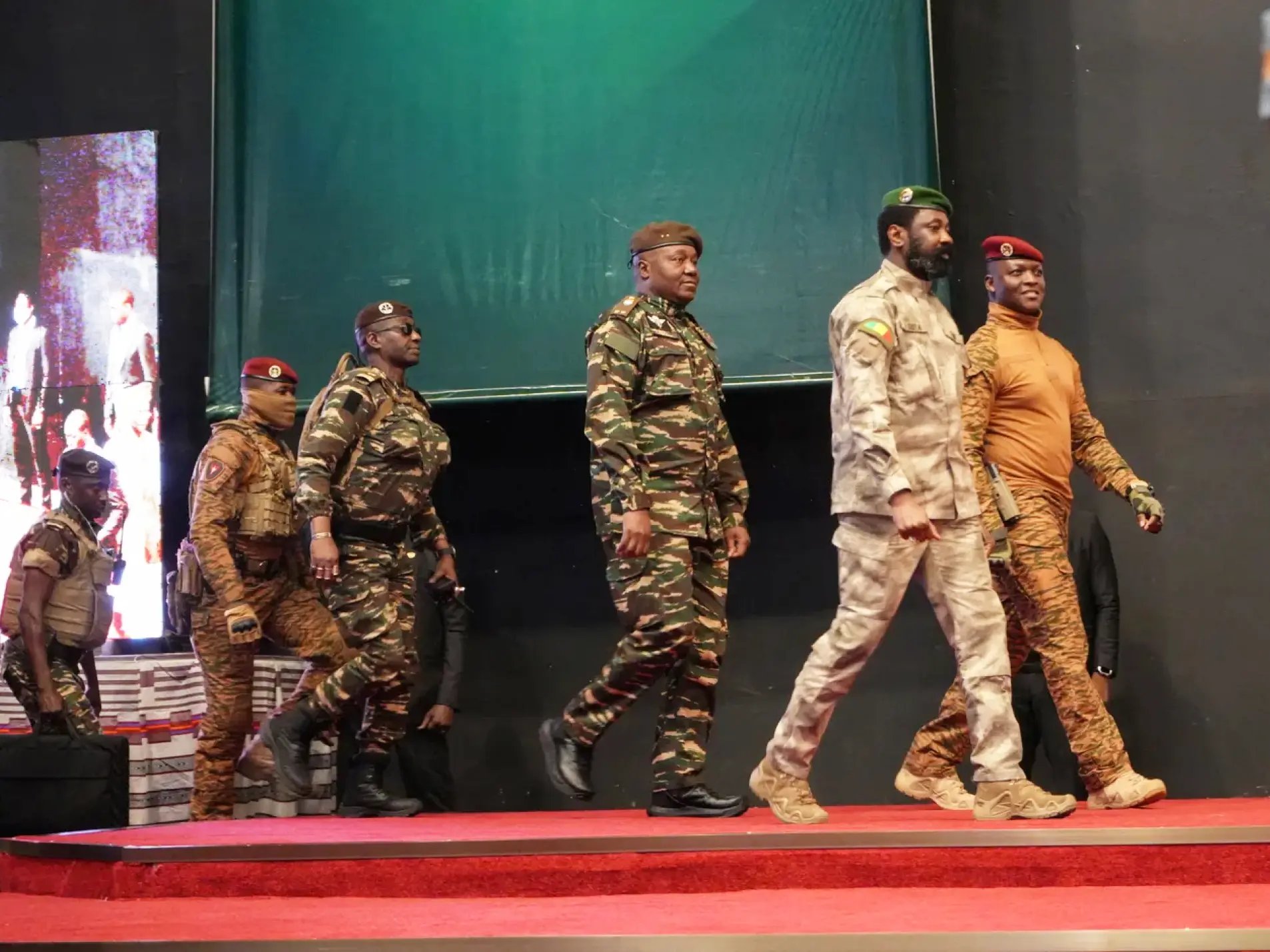
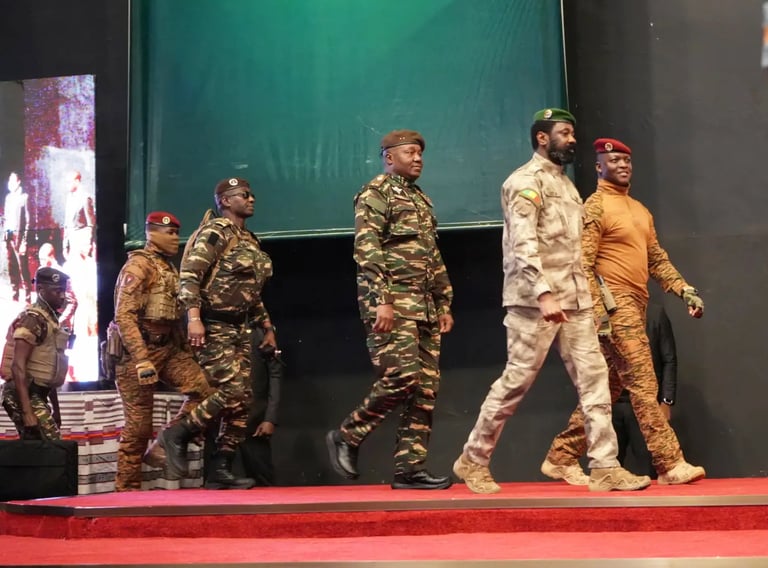
Mali, Burkina Faso and Niger inaugurated the headquarters of AES Television last Tuesday, December 23, 2025 advancing a shared media strategy for the Alliance of Sahel States (AES) and signaling deeper regional integration outside ECOWAS.
Presidents Gen. Assimi Goïta, Capt. Ibrahim Traoré and Gen. Abdourahamane Tiani launched the broadcaster during their second summit in Bamako, describing it as a platform to counter disinformation and assert a Sahel-led narrative. The two-day meeting reviewed the alliance’s first year since its formation in 2024, following the trio’s formal withdrawal from ECOWAS in January.
Security cooperation dominated the agenda. The three states have created a joint battalion to combat armed groups across their borders and have expelled French and U.S. forces. “No country or interest group will decide for our countries anymore,” Tiani said.
Earlier this month, Mali’s government announced it had recovered more than 761 billion CFA francs (approximately USD 1.2 billion) in unpaid mining revenues after auditing and renegotiating extractive-sector contracts, marking one of the country’s most consequential resource governance actions in recent history.
Institutional integration is also expanding. On December 26, Niger approved biometric national ID cards and electronic passports under the AES framework.
Speaking on December 15, President Ibrahim Traoré framed Burkina Faso’s current moment as one of geopolitical realignment and heightened security threats, including armed groups he says are backed by France, following the expulsion of French troops. He praised the resolve required to navigate these pressures, reaffirming his government’s commitment to national sovereignty and the independence of the judiciary.
The AES is emerging as a sovereignty-first alternative to existing regional blocs, prioritizing control over security, borders and information. Its trajectory restates the direction of African unity, reviving liberation-era claims that political independence requires autonomy from external power and postcolonial institutions.