Rastafari, Jamaica & the Question of Africa
HAILE SELASSIEAFRICAN UNITY
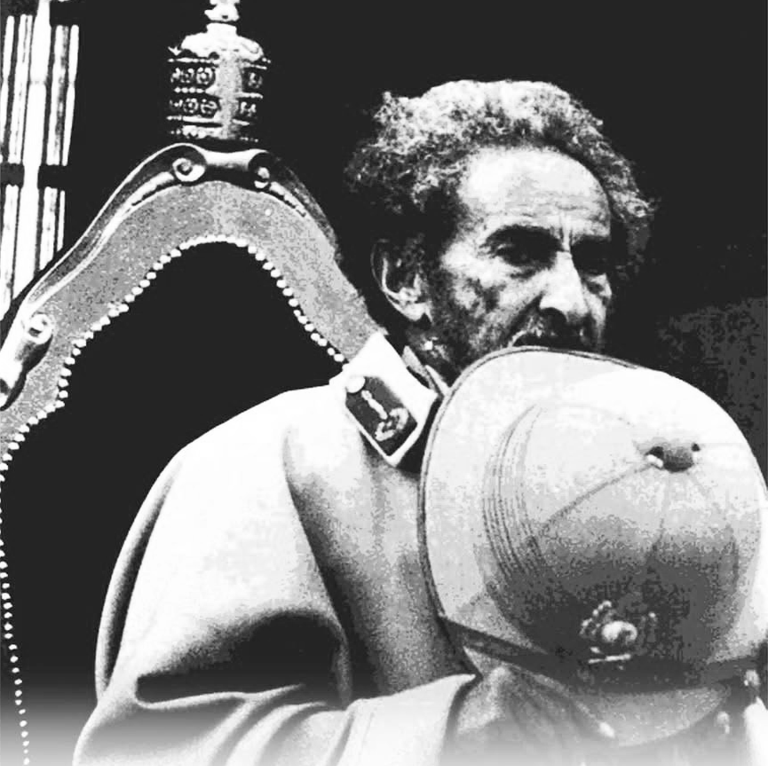
To reflect on Rastafari is inevitably to address the question of Africa. And as Rastafari cultural expressions (including philosophical constructs and practices) continue to spread across the globe, another question has come to the fore: who ‘owns’ Rastafari? As non-Jamaicans adopt the culture and fidelity to the Jamaican model becomes an issue, 'owning' became a question of propriety in granting access to, and caring for, a shared patrimony.
The question is often posed with preservationist intentions. Where the Jamaican model is considered the archetype, this feeds into the idea of Rastafari as Jamaican cultural property rightfully deserving recognition and protection - or compensation. But the very framing of the question reveals how far the conversation has drifted from the movement's original center of gravity.
The Rastafari movement emerged in Jamaica, but it united under Africa and Emperor Haile Selassie I.
This distinction mattered from the beginning. Early Rastafari identified as Ethiopian, looked to Africa as home, and regarded Haile Selassie as the supreme point of loyalty. Figures such as Leonard Howell openly challenged colonial authority while affirming the sovereignty of His Imperial Majesty. In colonial and later nationalist eyes, this made the movement a destabilizing force. Rastafari was persecuted, surveilled, imprisoned, and dismissed as irrational.
The antagonism was not merely cultural. Rastafari represented a competing political and spiritual loyalty. While Jamaica was attempting to construct a national identity, Rastafari people were looking beyond the island toward Ethiopia and Africa. Their demand was repatriation, not integration.
Over time, however, the movement underwent a process of recognition and incorporation. The state shifted from repression to accommodation. Academic studies, rehabilitation programs, official recognition, and later the global success of reggae helped transform Rastafari from a perceived threat into a celebrated national asset.
Ironically, many of the features now regarded as distinctively Rastafari are themselves approximations, continuities, or retentions of African traditions. The idea of the King as God, Ethiopia’s national colors, locks worn by spiritual devotees, holistic uses of marijuana and other herbs, drumming, spirit-centered music, and the persistent orientation toward Africa, all have precedents beyond Jamaica. At Howell's Pinnacle community, African speech, drumming, and cultural practices were not abstractions but lived realities.
This is not to suggest that contemporary Africa offers an uncontaminated alternative. Just like the Jamaican situation, postcolonial African societies have also inherited Western concepts of nationhood, identity, and intellectual property. Ghana’s patenting of kente cloth which suggests that cultures, symbols, or traditions can be owned, or exclusively claimed reflects a larger modern proprietary logic.
The deeper question, then, is not whether Rastafari belongs to Jamaica or Africa. It is whether a movement grounded in African consciousness and liberation can be reduced to any ‘national’ claim of ownership.
Ultimately, the debate risks missing the movement's central point. Rastafari is not primarily locks, language, colors, music, philosophy, or even repatriation. These are important, but they are secondary.
The question of what Rastafari is, leads to who Rastafari is. The answer given by the movement from its inception was Haile Selassie I.
Once that is recognized, Jamaica and Africa appear not as competing claimants but as different sites within a larger story. Rastafari people in Jamaica ingeniously formulated the widely adapted philosophical/cultural expressions and gave the movement global visibility. Africa provided its historical and spiritual horizon.
Yet the movement continues to point toward, a reality larger than both. That is why, despite all attempts to nationalize, commodify, or claim it, Rastafari remains what it has always been: a vision of Africa united under the banner of Kadamawi Haile Selassie I.