Rastafari Inclusion in Governance: A Call for Justice and National Unity in Sierra Leone
AFRICARASTAFARI WORKS
As Sierra Leone continues to strengthen its democratic institutions and promote inclusive governance, increasing attention is being drawn to the need for recognizing and integrating marginalized communities into national decision-making processes.
Among these communities is the Rastafari movement, a cultural and spiritual group whose contributions have long been overlooked.
For decades, Rastafarians in Sierra Leone have faced social stigma, legal challenges, and exclusion from mainstream governance. Despite their visible role in promoting peace, cultural identity, agriculture, and youth empowerment, their voices remain largely absent in policy discussions.
Legal Recognition Remains Key
A central issue affecting the Rastafari community is the lack of formal legal recognition. Practices such as wearing dreadlocks and the sacramental use of cannabis have historically conflicted with colonial-era laws that still influence the country’s legal framework.
Advocates argue that recognizing Rastafari as a legitimate faith would:
Protect members from discrimination in schools, workplaces, and public institutions
Allow for the formal registration of Rastafari organizations
Promote religious freedom in line with constitutional values
The Rastafari Council of Sierra Leone has been actively pushing for these reforms, positioning itself as a unified voice for the community.
Addressing Historical Marginalization
Observers note that inclusion must also involve addressing past injustices.
Many Rastafarians have experienced systemic bias and social exclusion often being misunderstood or stereotyped.
Calls are growing for:
National acknowledgment of discrimination against Rastafari communities
Greater inclusion in cultural and reconciliation dialogues
Access to land and resources for community development, particularly in agriculture
Such measures, experts say, are critical for building trust and fostering national unity.
Representation in Governance
Beyond recognition, there is increasing demand for direct representation. The absence of Rastafari voices in governance structures has led to policies that do not fully reflect their realities.
The Rastafari Council has proposed:
Establishing advisory roles within government ministries
Inclusion in national consultations on youth, culture, and human rights
Pathways toward representation in local councils and national bodies
Analysts argue that meaningful participation not tokenism is essential for true inclusion.
A Resource for National Development
Far from being a marginalized group, Rastafarians are being recognized globally for their contributions to sustainable living and cultural innovation.
In Sierra Leone their potential contributions include:
Agriculture: Promoting organic farming and food security
Health: Advancing herbal medicine and natural healing practices
Creative industries: Strengthening music, arts, and cultural tourism
These areas align closely with Sierra Leone’s development priorities, presenting an opportunity for collaboration.
The Role of the Rastafari Council
At the center of these efforts is the Rastafari Council of Sierra Leone, which continues to advocate for recognition, unity, and national engagement.
The Council aims to:
Represent Rastafari interests at national and international levels
Promote discipline, education, and community development
Serve as a bridge between government and grassroots communities
Leaders within the movement believe that with proper support, the Council can play a transformative role in shaping inclusive policies.
A Moment for Action
As Sierra Leone advances its democratic agenda the inclusion of the Rastafari community presents both a challenge and an opportunity. It is a chance to correct historical wrongs, embrace cultural diversity, and harness the strengths of all citizens.
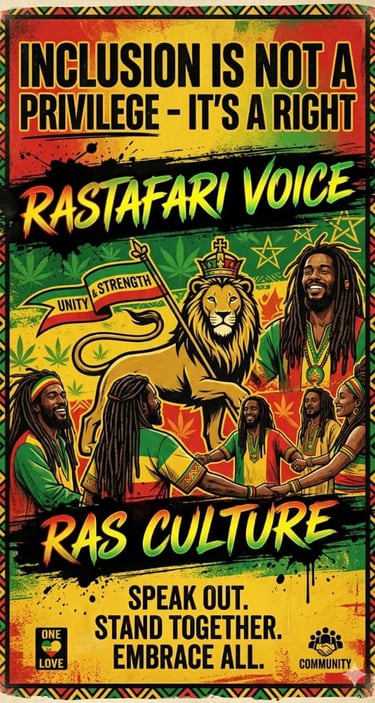
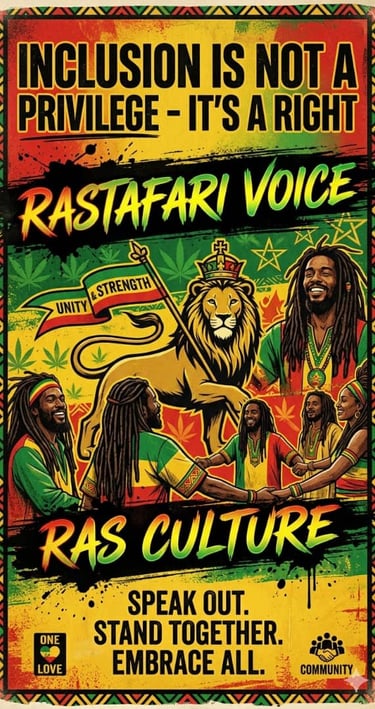
The message from Rastafari advocates is clear: inclusion is not a privilege—it is a right.
For editorial inquiries or contributions, contact:
Amb. Mohamed Lyrics Bangura (Ras Culture)
Email :banguramohamed715@gmail.com