Marijuana farming actualizes the promised 24-hr economy
ABOLISH CANNABIS PROHIBITION
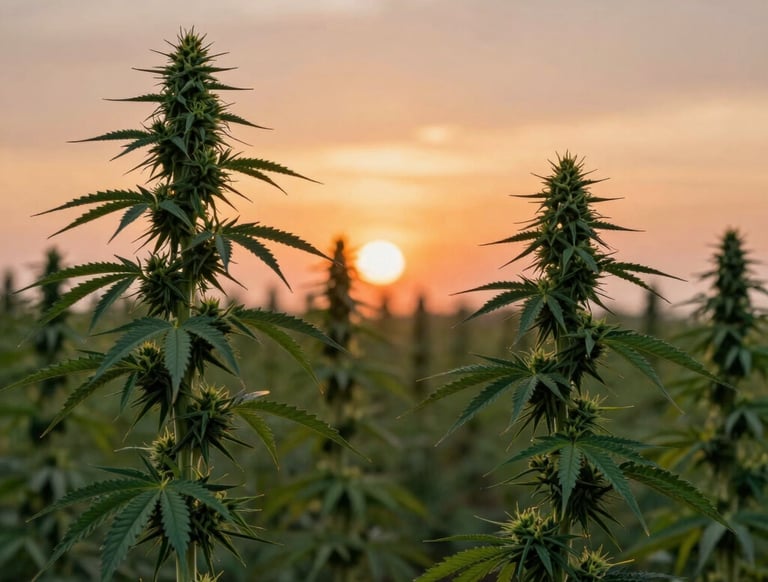
The Minister of Interior’s statement that a particular region in Ghana “has been identified as a hub for marijuana production, with the illicit drug being exported to Nigeria and other countries packaged with a Ghana flag,” should be positively welcomed. Globally, Ghana is associated with herb production and use.
Of course, the use of the term “illicit drug” is patently obsolete and highly problematic. It reflects certain anxieties about the country's treaty obligations and a distancing from the lived reality in Ghana's interior.
As Pres Khex Pongo, Chair of the RCG Advocacy Commission, stated: “marijuana is not a drug.” Pres Khex argues that it is no longer useful to describe marijuana as either an illicit substance or a dangerous drug, especially as the countries that led the world down the rabbit hole of cannabis prohibition are themselves changing course.
The US, which championed the failed war on cannabis, is clearly evolving its policy toward the abolition of cannabis prohibition - a position that African countries, for obvious historical reasons, should be championing. It is wrong to call cannabis “illicit,” Pres Khex writes, when a country that imposed such terms on the rest of the world has itself moved medical marijuana and research marijuana from Schedule I (illicit, no accepted use) to Schedule III (accepted use). Africans should finally put an end to the regurgitation of vacuous inherited terminology designed to criminalize Africans and the longstanding marijuana community.
For decades, it was farmers, sellers, and users - the marijuana community - who sustained the culture against the odds of pointless (sometimes lethal) persecution. Today, that marijuana culture has become a breadbasket for capitalist extraction and state interest in regulated cannabis markets complete with anticipated tax revenue windfalls. Why permit deep-pocketed investors to profit while criminalizing the very people who made the industry possible?
Ras Kofi Asante, RCG administrator, points out that “The Volta Region [like other territories] is implementing the 24 hr economy,” promised by the government. The farmers, he notes, have employed “youths in Agriculture, giving opportunities to marginalised groups with cannabis. This is something the politician can only promise but cannot implement.”
“It will be wise as a country,” he adds, “to enact policies that can harness this potential rather than imprison these bold youths defeating poverty in a neo-colonial era.”
Beyond providing meaningful employment and stimulating local economies, these communities are preserving generations-deep indigenous marijuana traditions that predate and exceed the era of cannabis prohibition. The producers highlighted by the Minister are outlasters of prohibition and, therefore, on the right side of history. The region should not be isolated. It should be protected alongside all other marijuana-producing areas.
Ghana and Africa should not continue echoing a flawed conceptual vocabulary we did not create. The language of “illicit drugs” emerged from unequal international agreements designed by nations that knew little about the herb, at conferences where neither Black African peoples nor the marijuana community were represented.
Today, sovereign African nations possess the explicit right to determine cannabis policy according to their own realities. They are not obligated to employ colonially-inherited terminology rooted in categories established in 1925. The legal framework itself contains room for alternative approaches. SNCD, 1961, Article 36 paras. 2, 3 and 4, and UNCITN, 1988, Article 3 paras. 1, 1(c), 2, 3 and 11, must also be read alongside the primacy of human rights which the UN represents, over treaty obligations.
Uncritical observance of treaty obligations does not befit sovereign nations. Article 48 of the Vienna Convention permits revocation based on a fundamental error, while Article 62 recognizes a “change in circumstances” as grounds for invalidating consent to a treaty. These provisions challenge the INCB’s emphasis on SNCD Articles 26, 27 and 29, which seek to make prohibition binding across a signatory’s territory regardless of domestic law.
The SNDC and UNCITN also allow groups of countries to amend treaty obligations among themselves through inter se modification. Ghana, Nigeria, and the other countries mentioned by the Minister could therefore reach arrangements under which cannabis-related trade is not treated as a matter of criminal concern. Such an approach would not require global consensus.
The conversation has changed dramatically since the US abandoned its ill-fated global war on drugs at the turn of the century after finally admitting that it caused more harm than good. While the debate about whether the drug treaties actually prohibited marijuana use unfolds, John Collins reminds us that “the obligation” to pursue drug war policies is now “largely non-existent.”
A positive attitude towards marijuana production in the country resonates with provisions of the Vienna Convention on the Law of Treaties (1969), which permit states to decline compliance with treaty terms that were established in error or under circumstances that do not reflect a country's realities. Leaving aside the herb's well-documented benefits to users and the environment, we must take seriously, the respective communities' endorsement of marijuana production because it keeps the local economies afloat. This, the fact that Ghana is synonymous with marijuana culture, and the other factors discussed here should help ease the Interior Minister’s anxieties about noncompliance with outdated interpretations of treaty obligations.